

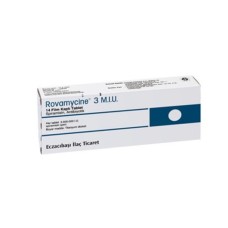

Introducing the Spiramycin Category and Its Role for Users
The Spiramycin category encompasses a class of antimicrobial medications that play a critical role in the treatment of various infections, particularly those caused by bacterial agents. Originating from the natural product of a bacterium, Spiramycin is primarily utilized in the medical field due to its efficacy against gram-positive bacteria, and it holds a unique position for treating specific infections, such as those caused by Toxoplasma gondii. In the United States, Spiramycin is available as a prescription medication, highlighting its importance in addressing serious health concerns.
This category is especially relevant for patients who may have allergies to more commonly prescribed antibiotics or those who exhibit drug-resistant infections. By serving as an alternative therapy, Spiramycin provides healthcare practitioners with a versatile tool for managing complex medical scenarios. Its application extends beyond mere infection control, as it also supports patient outcomes in various healthcare settings, including outpatient care and specialized treatment facilities.
How Products in This Category Generally Work
Medications within the Spiramycin category operate through various mechanisms that disrupt the growth and reproduction of bacteria. By inhibiting protein synthesis in susceptible bacterial cells, these drugs effectively halt bacterial proliferation. This action primarily targets the ribosomes of bacteria, which are essential for producing the proteins necessary for their survival and reproduction.
Many products related to this category share a conceptual foundation: the therapeutic use of antibiotics to combat infections. They typically belong to broader classes of antimicrobial agents, including macrolides and lincosamides, which have similar modes of action and therapeutic uses. By offering a range of antibiotics with distinct properties, this category enables healthcare providers to tailor treatment strategies based on the specific needs and conditions of their patients. The versatility of Spiramycin and its related products underscores their significance in contemporary medicine.
Main Benefits of Spiramycin
The benefits of Spiramycin extend beyond its antimicrobial properties, making it a valuable addition to the arsenal of medications for treating infections. Its targeted action, combined with an adaptable dosing regimen, allows healthcare professionals to maximize patient safety and treatment efficacy. Below are some of the core benefits of Spiramycin:
- Effective against a range of gram-positive bacteria.
- Useful in treating Toxoplasma infections, particularly in pregnant women.
- Lower risk of adverse effects compared to other antibiotic categories.
- Alternative for patients with allergies to penicillin or other standard antibiotics.
- Wide-reaching applications in both outpatient and inpatient settings.
Safety Considerations: Who Should Avoid Products from This Category
While Spiramycin offers numerous advantages, it is crucial for users to be aware of safety considerations before using medications in this category. Certain individuals may need to exercise caution or avoid Spiramycin altogether. Notably, patients with known hypersensitivity to Spiramycin or related compounds should refrain from using it to prevent allergic reactions, which can range from mild skin irritations to severe anaphylactic responses.
Additionally, pregnant or breastfeeding individuals should consult healthcare providers to assess the risks and benefits, despite Spiramycin's specific applications in pregnancy. Patients with liver or kidney impairments should also approach Spiramycin use with caution, as existing health conditions can impact drug metabolism and result in altered drug efficacy or increased toxicity. Consulting a healthcare professional before starting any medication in the Spiramycin category is essential to ensure safety and appropriateness for individual health needs.